|
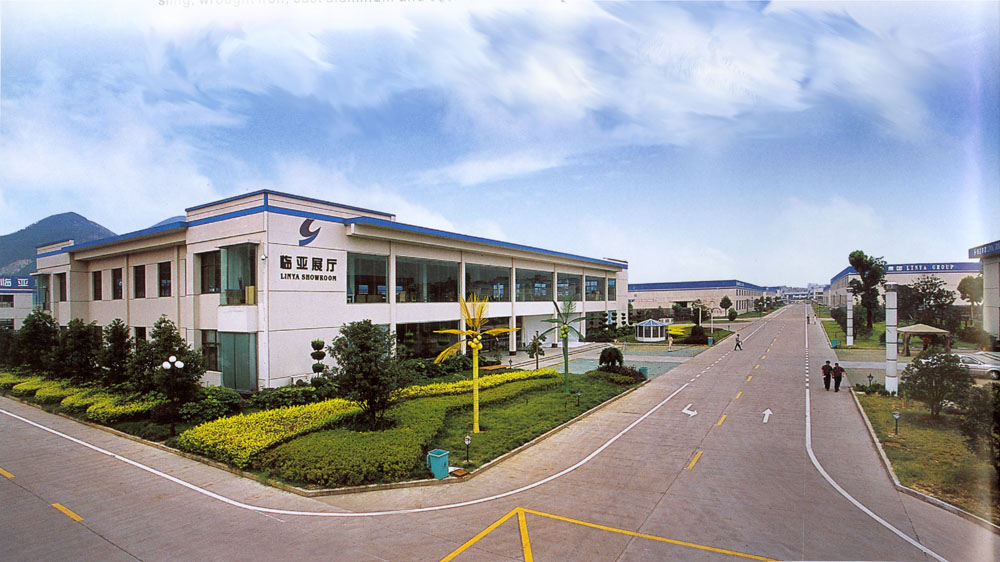
Linya Group Co., LTD Linya Group Ltd was established in November 1996. Prior to this our aluminium extrusion tubing company has traded since 1992. With the support of government policy, both national and local, Linya has worked hard to create a diversified group spanning investment, manufacturing, property and energy development sectors.
The group turns over million USD and exports million USD with capital assets of million USD. The manufacturing division covers an area of some 650 acres with a staff of over 5,000.
Linya is a leading business in Linhai city and is proud to promote local economic development. This has been recognised by the numerous awards we have achieved, including “Best private Enterprise” in Zhejiang province.
1、 Manufacturing
Linya aluminium extrusion tubing company is the most advanced manufacturing facility of aluminum alloy in eastern China. The factory covers an area of some 58,000 square meters with capital assets of 1million USD and has 16 aluminums profile extrusion lines.
The factory has equipment for anodic oxidation, electrophoresis paint and electrostatic spraying. Annual production capacity is 2 million tons. We have passed the ISO9001 quality system and have been recognized as the national nonferrous metal industry's most large-scale enterprise through the national metrology authentication unit. Our aluminum is used in construction, decoration and consumer products. The aluminum product is regarded as "the Chinese famous brand".
Zhejiang Linya craftwork Company Ltd covers an area of more than 200, 000 square meters, with a total investment of 2million USD. Our main products are outdoor leisure furniture, camping products, gazebos and sunshades. Every year, Linya exports more than 120 million dollars to Europe, America and Japan.
In July 2000 Linya obtained the import-export right. In October 2001 we obtained ISO9000 (2000) quality system authentication and related GS, CE certification.
Linya continually increases industrial infrastructure investment and enhances vertical integration to control quality and costs. In recent years the company invested ?million USD in industrial projects and invests heavily in technical renovation. This year the group invested ?USD in the updating of capital equipment to enable leaner and higher quality manufacturing and drive our competitive advantage.
2、Hydro-Electric Energy development
As part of Chinas’ national strategy to implement power transmission from west to east Linya have completed a hydropower scheme in Sichuan, Yunnan. This forms part of our group diversification strategy and the dam has a capacity of 0.5 Million Kilowatts. These projects give Linya Group long term revenue streams and strengthen our cashflow.
3、Propery and Investment business
Madrigalului - //free\\
One evening, as Sofia walked through the village, she stumbled upon an old, mysterious-looking book hidden away in a dusty antique shop. The cover read "Madrigalului" in elegant, golden lettering. Intrigued, Sofia purchased the book and took it back to her small cottage.
As the genre matured, it underwent dramatic stylistic shifts. The late 16th-century madrigal, particularly in the hands of Gesualdo and Claudio Monteverdi, pushed chromaticism and dissonance to shocking extremes. Gesualdo’s settings, born from his own traumatic personal life (he had murdered his wife and her lover), are filled with jarring harmonic shifts that seem to prefigure Romantic angst by two centuries. Monteverdi, in his Cruda Amarilli and later Madrigali guerrieri et amorosi (Warlike and Amorous Madrigals), codified a new "second practice" ( seconda pratica ) where the rules of counterpoint could be broken for the sake of expressive power. This restless experimentation ultimately led to the birth of opera and the Baroque era; Monteverdi’s final madrigal books stand as a direct bridge between the Renaissance and a new musical age.
The villagers began to call Sofia the "Madrigalului", or the "Singer of Madrigals". They believed that her voice had the power to heal, to bring people together, and to connect them with the natural world. madrigalului
The madrigal's origins lie in early 14th-century Italy, but its true flourishing began around 1520 in the city of Ferrara, a vibrant cultural court. It evolved from earlier forms like the frottola , but distinguished itself through a profound commitment to the text. Unlike the rigid, repetitive structures of sacred music, the madrigal was through-composed—meaning each line of poetry received new musical material. The goal was prima le parole, poi la musica ("first the words, then the music"). Composers like Jacques Arcadelt, Cipriano de Rore, and later Luca Marenzio and Carlo Gesualdo, became masters of "word-painting" (or madrigalismo ). When the poem mentioned a laugh, the melody might leap joyfully upward; for a sigh, a descending, dissonant suspension; for darkness, low, somber chords. This vivid musical illustration of individual words and phrases was revolutionary, transforming abstract sound into a language of palpable emotion.
However, by the early 1600s, the pure madrigal began to fade. The rise of monody (solo song with instrumental accompaniment), the basso continuo, and the sheer spectacle of opera drew composers and audiences away from the unaccompanied vocal ensemble. The concertato style, which mixed voices and instruments, eclipsed the intimate madrigal. Yet its legacy is immense. The madrigal’s emphasis on text expression laid the groundwork for the recitative and aria of opera. Its chromatic daring influenced harmony for centuries. And its spirit—the idea that music can minutely trace the contours of human emotion—lives on in everything from the Lieder of Schubert to the narrative film score. One evening, as Sofia walked through the village,
Historically, the madrigal (or madrigalului in its possessive form) represents a synthesis of poetic and musical elements from the 14th to 17th centuries. Key features include:
Under the velvet vault of the evening, Where time arrests its flight, Resounds the echo of the madrigal, An old whisper, devoid of longing. As the genre matured, it underwent dramatic stylistic shifts
Today, the term evokes more than just a musical form; it represents a centuries-old tradition of vocal artistry that continues to animate the cultural life of modern society.
Years later, when Sofia was old and wise, she passed the book down to her granddaughter, who continued the tradition of singing madrigals and spreading their magic. And so, the legacy of "Madrigalului" lived on, a testament to the power of music, poetry, and the human spirit.
: The choir revitalized Renaissance music in Romania and blended it with contemporary and folk-inspired compositions.
STUDIUL ARTELOR ȘI CULTUROLOGIE: istorie, teorie, practică
In 1999, the group invested 8 million yuan in Jiuzhaigou Valley Sichuan province to build the four-star “Gesang Hotel”. The Building area is 30,000 square meters and has 310 rooms. Facilities include a Chinese and Western restaurant, recreation and performance hall, sauna, tea room and conference room.
In 2008, the group established Linya loan company Ltd. with registered capital of 20 million USD. The main function is to support the cash flow of local small and medium sized companies. This company continues to offer efficient service to local companies and works to enhance the areas economic prosperity.
|